
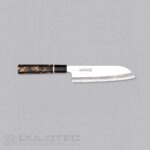
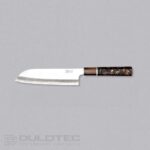


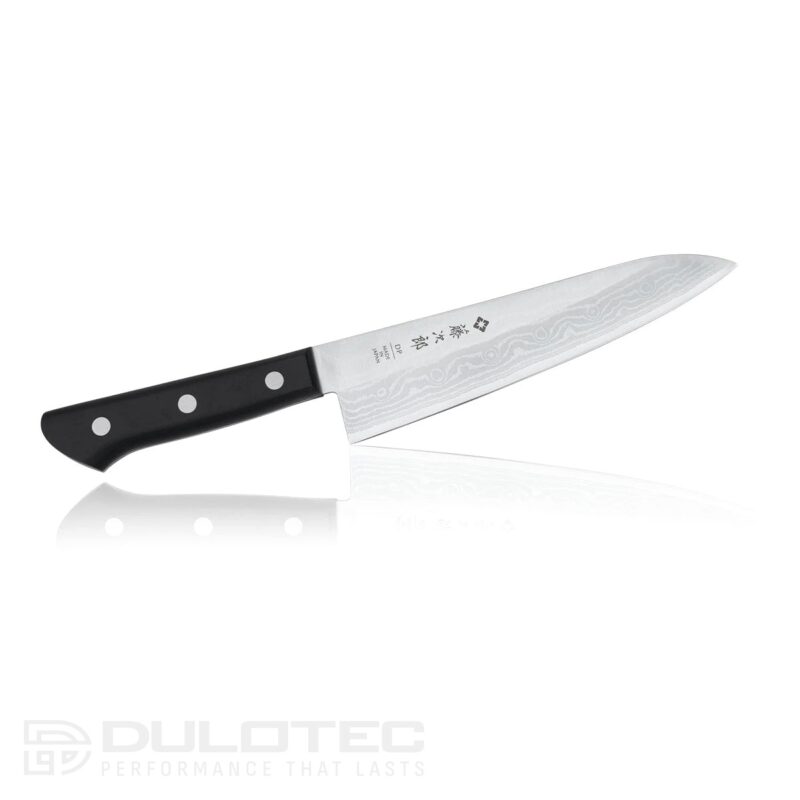
ZDP-189 Japanese Santoku Kitchen Knife, 180 mm, Carbon Fiber Handle
349,99 €
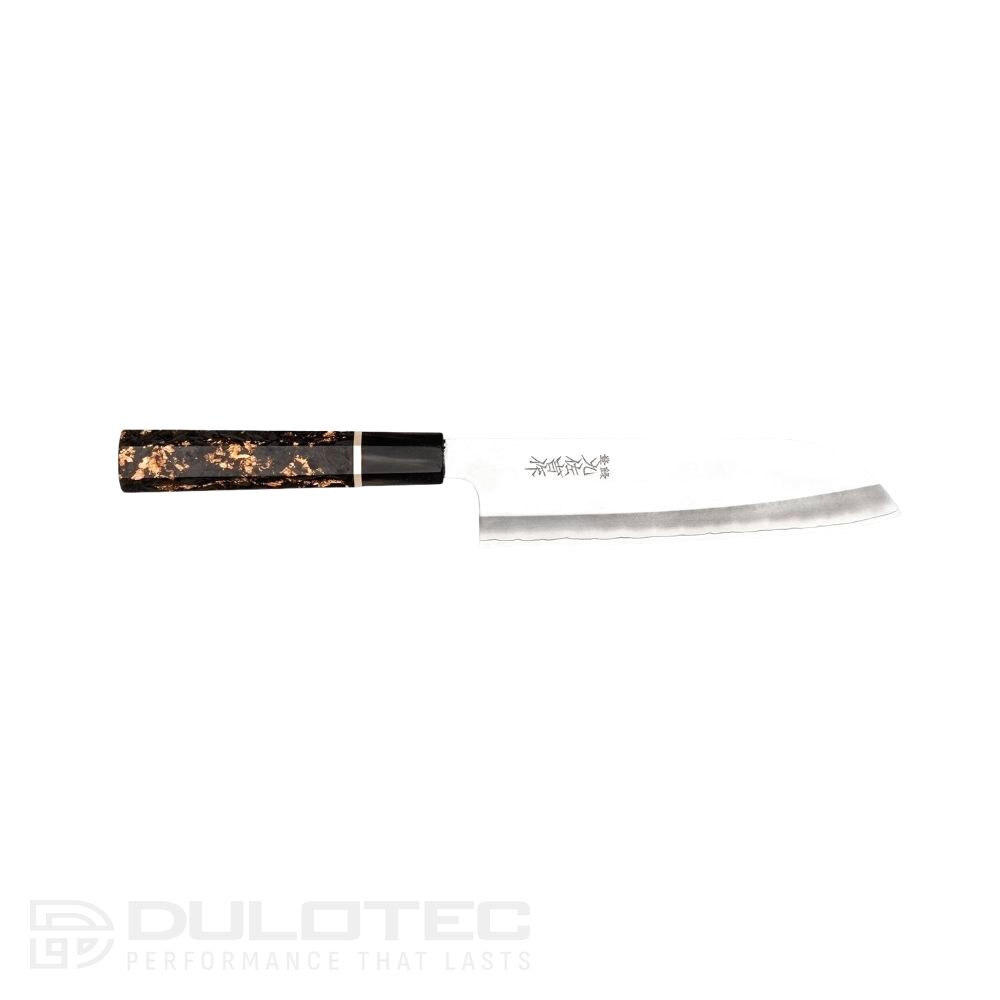
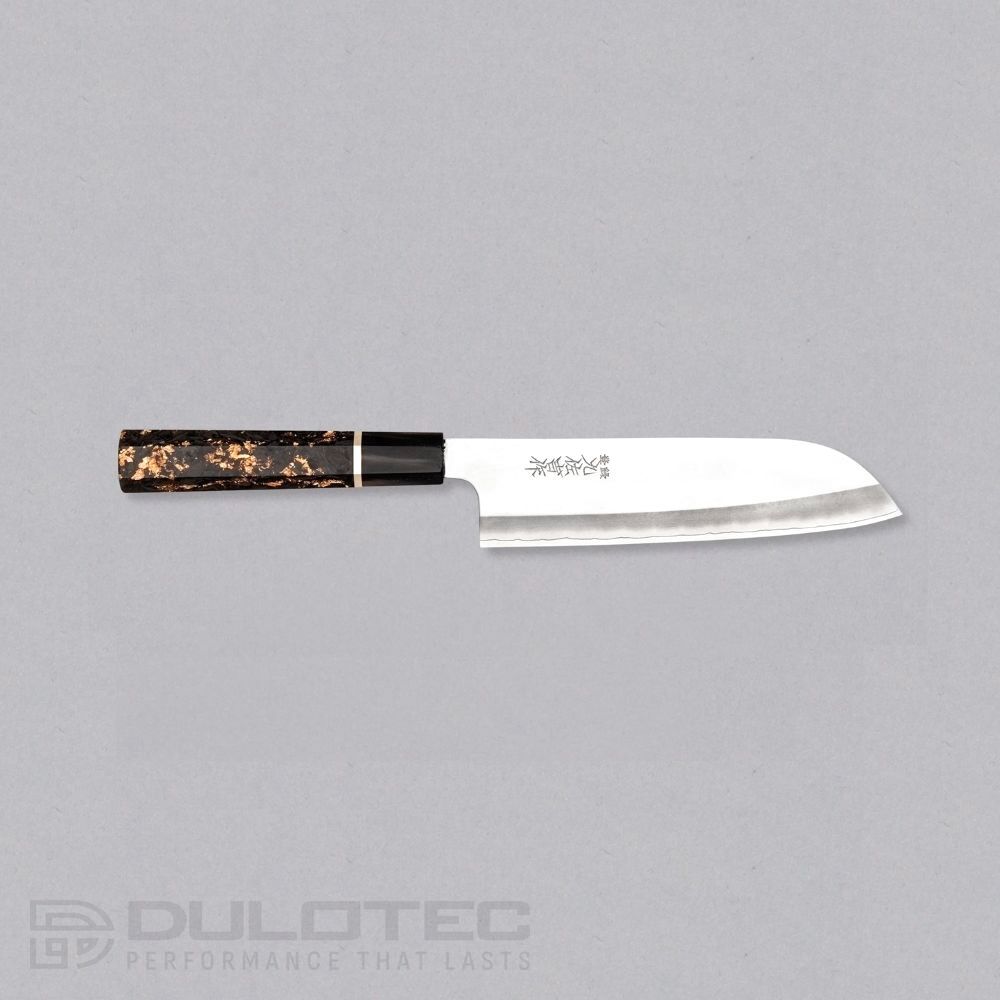
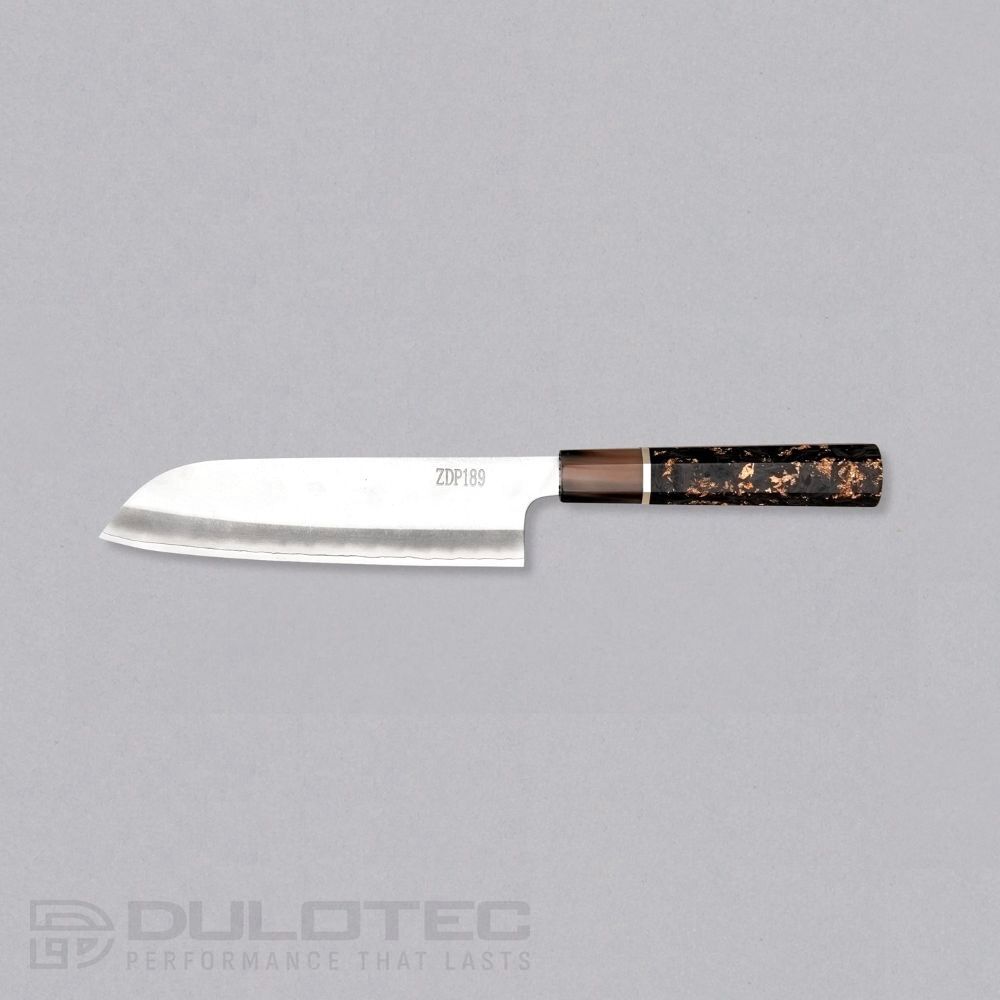
ZDP-189 Japanese Santoku Knife, 180 mm blade, carbon steel handle with gold inlays, Yoshida Hamono
In stock
ZDP-189 Japanese Santoku Knife – Precision from the Yoshida Hamono Forge
The Santoku ZDP-189 Silver Gold Carbon is a high-end Japanese kitchen knife created in collaboration with the traditional Yoshida Hamono forge in Saga, Japan. The ZDP-189 powder steel core ensures exceptional and long-lasting sharpness for faster, smoother, and more precise work in the kitchen.
ZDP-189 Steel—Hardness and Durability
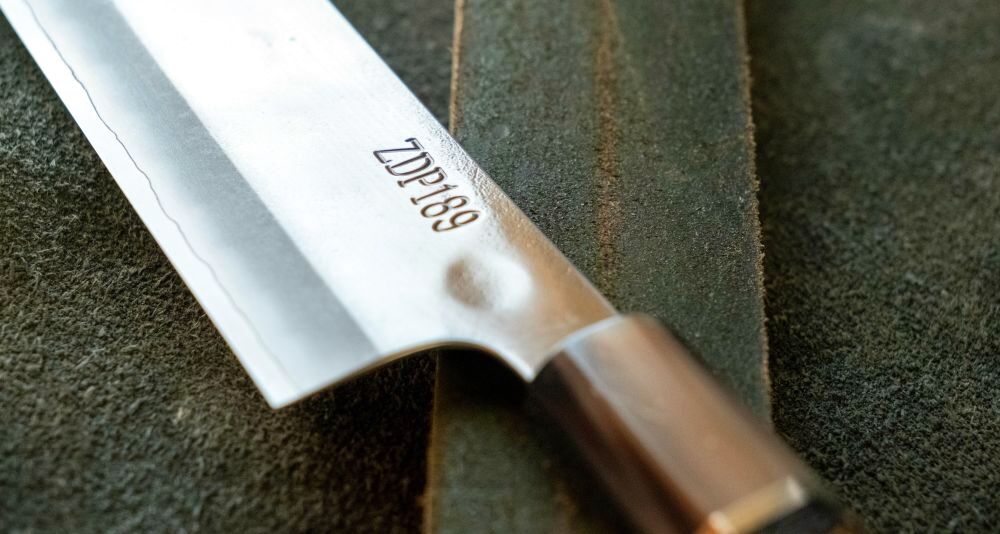
ZDP-189 is a stainless steel powder with approximately 3% carbon and 20% chromium. It is characterized by exceptional wear resistance and excellent corrosion protection.
A hardness of 65–67 HRC allows for sharpening to an exceptionally fine and durable edge. The composition includes tungsten, molybdenum, and vanadium to further strengthen the structure.
Chemical composition: C 3.00% | Cr 20.00% | W 0.60% | Mo 1.40% | V 0.10% | Mn 0.50% | Si 0.40%
Blade Design and Geometry
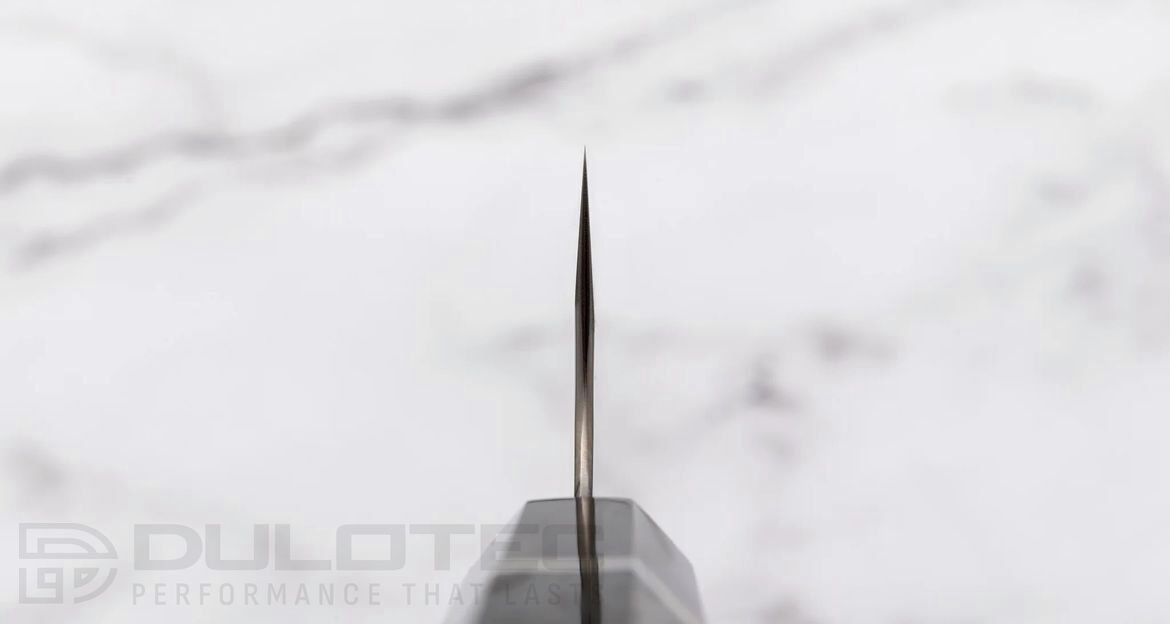
The hard ZDP-189 core is encased in softer stainless steel using the Warikomi (laminated wedge) technology. This protects the core from external stresses while preserving its cutting performance.
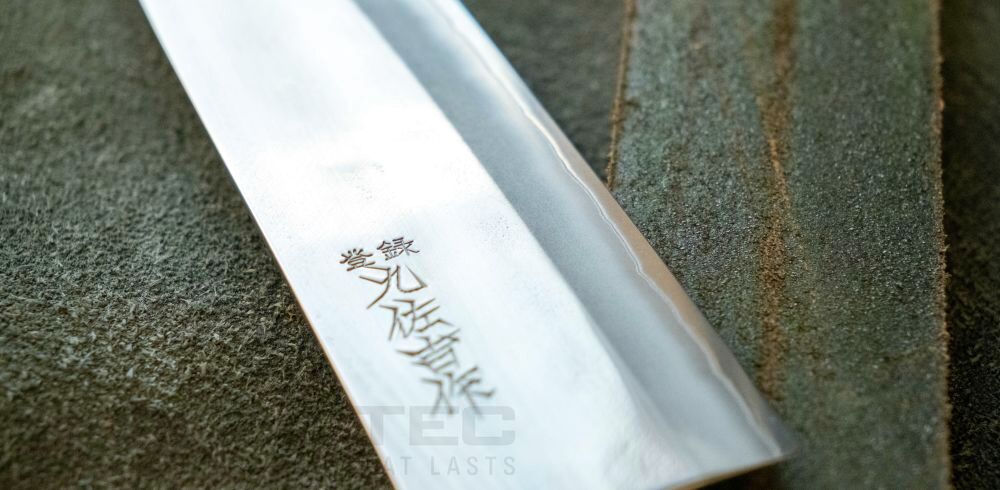
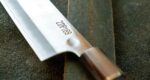
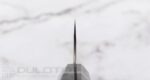
The double-sided V-groove and low profile ensure precise cuts with minimal resistance when slicing vegetables, fish, and meat. The blade is polished to a fine mirror finish with a delicate tsuchime texture—hand-forged.
Each knife is individually forged—an expression of the Japanese philosophy of wabi-sabi, which finds beauty in uniqueness.
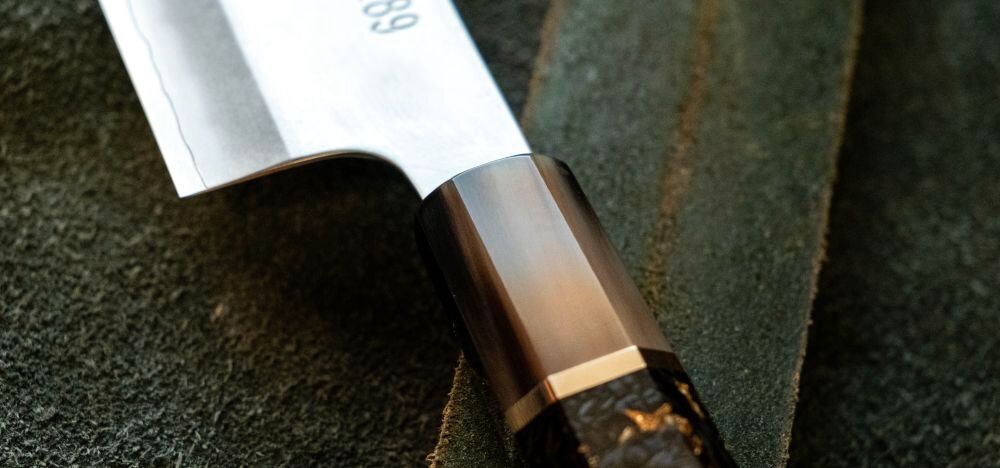
Carbon fiber handle with gold flakes
The handle is Japanese-style (wa), made of carbon fiber impregnated with dark resin and sprinkled with gold flakes. It is finished with traditional buffalo horn inlays.
- Non-porous and water-resistant material
- Crack-resistant
- Easy to maintain and durable
Instructions for Use and Maintenance
- Cut on a wooden, plastic, or rubber cutting board—avoid glass, ceramic, and metal
- Wash the knife by hand with warm water and a mild detergent
- Dry immediately after washing
- Sharpen using a Japanese water stone with the appropriate grit
- Store in a knife block, on a magnetic strip, or in a protective case
- Do not put in the dishwasher
- Do not scrape food off with the edge of the blade—use the back of the knife
- This knife is intended solely for cutting food
Yoshida Hamono knives are handcrafted from natural materials. Slight variations in color, texture, and weight may occur—a characteristic of artisanal production.
| Specifications | Value |
|---|---|
| Brand | Yoshida Hamono |
| Knife Type | Santoku |
| Steel on the blade | ZDP-189 (powdered stainless steel) |
| Construction | Warikomi (laminated wedge), double-sided V-cut, polished edge (migaki) |
| Hardness | 65–67 HRC |
| Total length | 320 mm |
| Blade Length | 180 mm |
| Blade Height | 46 mm |
| Spinal Thickness | 1.8 mm |
| Weight | 155 g |
| Handle Material | Carbon fibers impregnated with resin and gold flakes, with a buffalo horn inlay |
| Handle Style | Japanese (wa) |
| Handle Length | 130 mm |
| Place of Manufacture | Saga, Japan |
Frequently Asked Questions
What makes ZDP-189 steel special compared to ordinary kitchen knives?
What is Warikomi technology, and why is it important?
How do you sharpen a ZDP-189 steel knife?
Is this knife suitable for everyday use at home?
What is the handle made of, and why was this material chosen?
Can we expect differences between the individual knives in this series?
What are the basic rules for storing a knife?
| Weight | 0,16 kg |
|---|

 LED lanterns
 Fishing Lanterns
 Flashlights for Everyday Use / EDC
 Flashlights that run on AA/AAA batteries
 Lantern Accessories
 Long-range lights
 Powerful Flashlights for Wide-Area Lighting
 Powerful headlamps
 Professional Work Lights
 Tactical Flashlights
 Police Flashlights
 Rechargeable lanterns
 Headlamps with AAA batteries
 Professional Headlamps for Work
 Combat knife
 Fixed Blade Knives
 Camping Knife
 Compact
 Folding Knives
 Automatic knives
 Everyday Knives
 Keychain Knife / EDC
 Large Folding Knives
 Hunting Knives
 Kitchen Knives
 Japanese Kitchen Knives
 Knife Accessories
 Tactical Knives




Reviews
Clear filtersThere are no reviews yet.