Blog
Lantern Range—Factors, Technologies, and Practical Significance

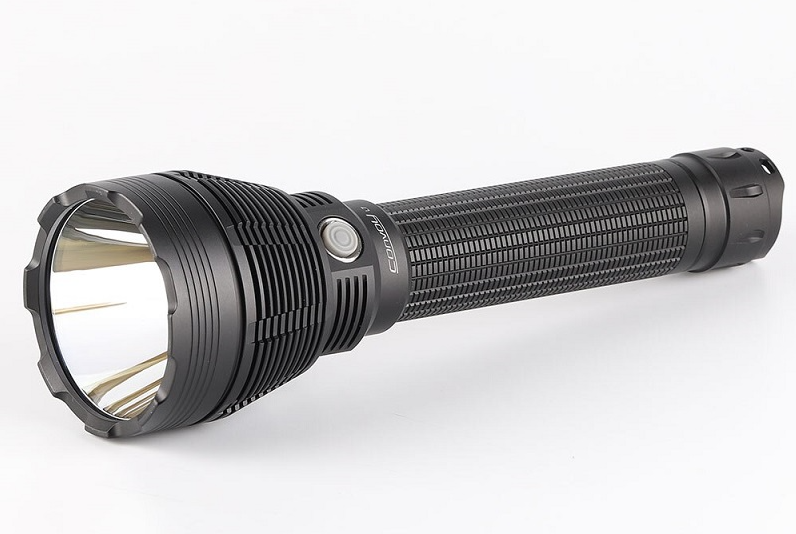
Flashlights are among the most widely used portable light sources, with applications ranging from household and recreational use to professional use by the police, the military, and emergency services. One of the most important factors when choosing a flashlight is its beam distance—the distance at which the light beam can effectively illuminate objects. In this article, we’ll explore exactly what flashlight beam distance is, how it’s measured, what factors influence it, what technologies are used to increase it, and what its practical significance is in real-world situations.
What is the range of a flashlight?
The range of a flashlight refers to the maximum distance at which its light can illuminate an object so that it is clearly visible to the human eye. According to the ANSI (American National Standards Institute) standard, this distance is determined based on a minimum light level of 0.25 lux—approximately the amount of light needed to read a newspaper in complete darkness.
For example, if a flashlight has a range of 200 meters, this means that its beam can provide at least 0.25 lux of light on an object located 200 meters away. From a practical standpoint, at 0.25 lux, reasonably reflective objects (a white house, a road sign), but if you’re illuminating dark objects, it’s best to aim for at least 0.5 lux—that is, to halve the ANSI range.
Key Factors Affecting Range
The beam distance is not determined solely by how "bright" the flashlight is (i.e., how many lumens it emits), but also by a number of other technical and design characteristics:
1. Optics and Beam Focusing
One of the key factors affecting a flashlight’s range is the diameter of the reflector or optics. All other things being equal, a larger diameter results in a flashlight with a longer range and a narrower beam. Contrary to popular belief, the depth of the reflector has almost no effect on the light’s range—it determines how many lux will be concentrated in the corona around the light’s focal point. A long-range flashlight can be achieved using either a reflector (most effective), TIR (total internal reflection) optics, or a Fresnel lens—optics generally result in a shallower depth than reflectors.
2. LED Type
Modern flashlights use LEDs that vary in brightness, efficiency, and beam pattern. Some models, such as the Luminus SFT40, SBT90, or Osram CSLNM1, are specifically designed for long-range beam projection and are commonly found in so-called “thrower” flashlights.
3. Luminous flux (lumens)
Lumens are a unit of measurement for the total amount of visible light emitted by a flashlight. Although more lumens usually mean brighter light, this does not always result in greater beam distance. What matters is how the light is directed and what type of LED is used.
4. Power Supply and Controller
A constant and stable current to the diode is important for achieving optimal performance. Some flashlights use specialized drivers that provide maximum light output for short periods (“turbo” modes), which increases the beam distance. Very often on the market, you can find flashlights with a “direct” driver—a cheap trick to show high peak power and beam distance, but only while the battery is fully charged and the flashlight hasn’t heated up. A better option is a long-range flashlight with a constant-current driver, which delivers stable performance at all times.
5. Temperature and Overheating Protection
Many high-powered flashlights heat up quickly. Most models have thermal protection that reduces brightness after a certain amount of time to prevent damage. This means that maximum beam distance is often only achievable for short periods. Be skeptical when manufacturers start making childish and loud claims about “mega” and “turbo” power—even if they’re true, they’ll only last for a very short time, and you should always prioritize practicality.
Types of Lanterns by Range
Lanterns can be classified according to their illumination range:
- Up to 100 meters—compact models for everyday use, camping, or walks.
- 100–300 meters – versatile flashlights for outdoor use, hiking,
- 300–1,000 meters – powerful flashlights for police, hunting, and military use—compact enough and quite versatile
- Over 1,000 meters – so-called “thrower” flashlights, designed for professional purposes such as surveillance, search, and rescue operations. We also offer LED flashlights—Laser Emitting Diode—with a white laser that achieves an impressive range of over 1,500–2,000 meters in a compact size and with a narrow beam.
Some of the most powerful models on the market today have a range of over 2,000 meters—an impressive achievement made possible by modern LED and optical technology.
Practical Applications of High-Range Flashlights
Long-range floodlights are widely used in various fields:
- Search and rescue operations—to locate people or objects in dark or hard-to-reach areas.
- Hunting and Fishing – for long-distance observation without approaching the game.
- Security and Patrols – for monitoring remote perimeters without physically moving around.
- Military and police use—illuminating targets or areas from a safe distance.
- Professional Photography and Videography – Lighting Subjects from a Distance During Nighttime Shoots.
How do you choose a flashlight that suits your needs?
The choice of flashlight should be based on the specific application. For everyday use, a long beam distance isn’t necessary—comfort, compactness, and battery life are more important. For professional or tactical use, however, beam distance becomes a key factor, and in that case, you might want to consider the Dulotec Guardian or the Dulotec Convoy C8+ Ultra.
It is good practice to consider not only the maximum range, but also the beam quality, runtime on the highest setting, battery type, water resistance, and impact resistance.
Technological Innovations and the Future of Long-Range Lighthouses
As technology advances, there has been a steady increase in the efficiency of LED light sources and improvements in optical systems. Laser flashlights using LEP (Laser Excited Phosphor) technology now offer phenomenal range (over 2 kilometers) despite their relatively small size. Although expensive, these devices represent the future of tactical and industrial lighting.
Conclusion
The beam distance of flashlights is a key characteristic that must be evaluated in the context of the specific application. It depends not only on power but also on the optical design, the type of LED, the power supply, and thermal protection. With modern technology, consumers can now choose from a variety of models that offer incredible range and functionality. Understanding the factors that influence beam distance helps ensure a more informed choice and maximum efficiency during use. Last but not least, it’s a good idea to purchase your flashlight from a professional retailer with excellent service and warranties, such as DuloTech EOOD.

 LED lanterns
 Fishing Lanterns
 Flashlights for Everyday Use / EDC
 Flashlights that run on AA/AAA batteries
 Lantern Accessories
 Long-range lights
 Powerful Flashlights for Wide-Area Lighting
 Powerful headlamps
 Professional Work Lights
 Tactical Flashlights
 Police Flashlights
 Rechargeable lanterns
 Headlamps with AAA batteries
 Professional Headlamps for Work
 Combat knife
 Fixed Blade Knives
 Camping Knife
 Compact
 Folding Knives
 Automatic knives
 Everyday Knives
 Keychain Knife / EDC
 Large Folding Knives
 Hunting Knives
 Kitchen Knives
 Japanese Kitchen Knives
 Knife Accessories
 Tactical Knives